 +263 772 354 780 | +263 772 301 871

Indian Myna Birds
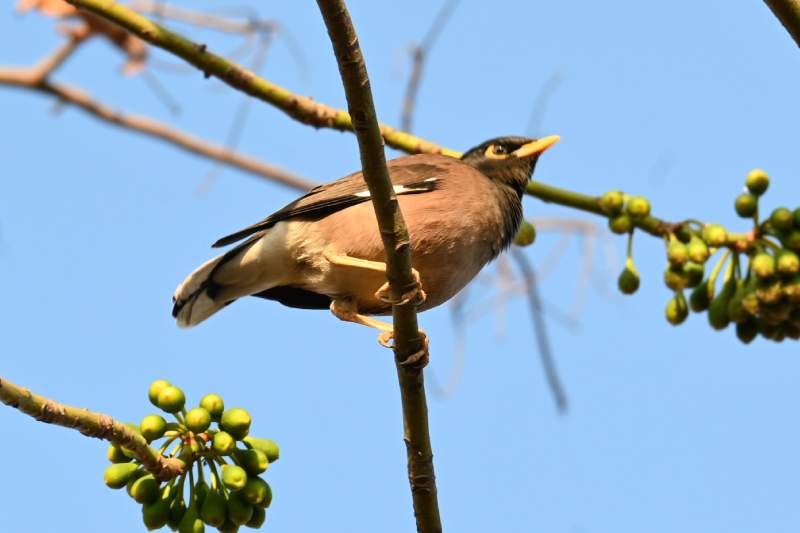
Indian Myna Birds are known for their remarkable adaptability to human-altered environments, making them one of the most successful urban bird species. Their ability to live closely with humans has led to their spread across many parts of the world, often to the detriment of local bird populations. They compete aggressively for nesting sites, displacing native birds and impacting biodiversity. Control measures, including trapping and habitat management, are employed in some areas to manage their populations and mitigate their impact on native species. Despite their status as pests, Indian Mynas are intelligent and resourceful birds, showcasing a high degree of social behavior and communication.
Scientific Name: Acridotheres tristis
- Habitat: Originally from Asia, Indian Myna Birds have adapted to a wide range of habitats including urban areas, suburbs, farmlands, and forest edges. They are considered highly invasive in many parts of the world.
- Diet: Omnivorous, feeding on fruits, seeds, insects, human scraps, and small vertebrates. Their adaptable diet contributes to their success as an invasive species.
- Physical Characteristics: Indian Myna Birds have a brown body, a black head, yellow legs, and a distinctive yellow eye patch. They measure about 23 cm (9 inches) in length and have a strong, straight beak. Their wings are short and rounded, enabling quick, direct flight
- Lifespan: They can live up to 12 years in the wild, though average lifespans are generally shorter.
- Reproduction: Indian Mynas are monogamous and territorial during the breeding season. They nest in a variety of cavities, including tree holes and man-made structures. Females lay 4 to 6 eggs per clutch, which are incubated for about 18 days. Chicks fledge about 22 days after hatching.
- Conservation Status: Not listed by the IUCN due to their widespread distribution and high populations. However, they are considered a significant pest and invasive species in many regions outside their native range, leading to efforts to control their numbers.
Indian Myna Birds at Chipangali
Zero
Species: Indian Myna Bird
Age on Arrival: Approx. 3 weeks old
Arrival Date: Unknown
Sex: Male
Zero’s Story: Zero’s tale is one of unexpected redemption, from a vulnerable fledgling who fell from his nest to becoming a beloved member of the Chipangali family. Despite belonging to a species often vilified for its invasive nature, Zero’s individual story of rescue and the sanctuary’s decision to care for him despite his species’ reputation speaks volumes about Chipangali’s ethos. Zero’s ability to mimic sounds adds a layer of intrigue and joy to the sanctuary, reminding us that every creature has its own unique value and place in the world.
Get Involved!
