 +263 772 354 780 | +263 772 301 871

Laughing Doves
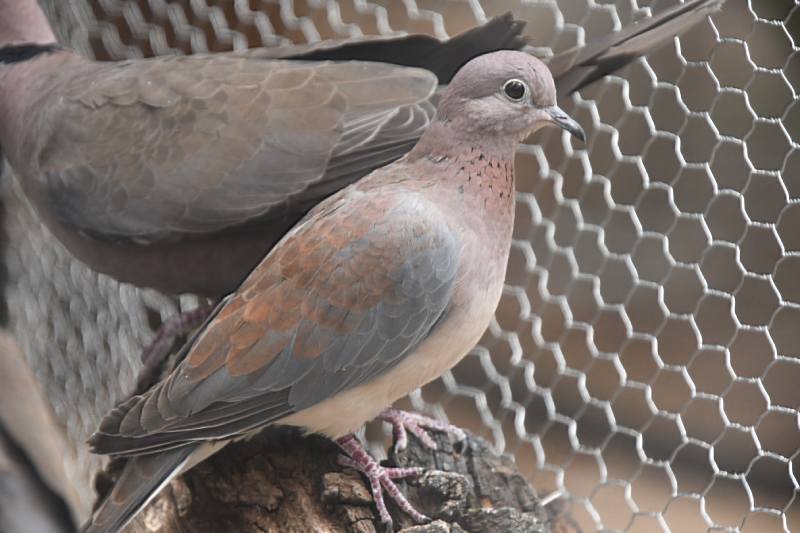
Laughing doves are known for their gentle cooing sounds, which add a peaceful ambiance to their environments. They have adapted well to human-altered landscapes, often seen in gardens, parks, and urban settings where food and water are readily available. Despite their common status, both species play important roles in their ecosystems as seed dispersers, helping to maintain the balance of plant communities.
Scientific Name: Spilopelia senegalensis
- Habitat: Laughing Doves are found in a wide range of semi-arid and arid habitats, including open countryside, farmlands, and urban areas across Africa, the Middle East, and the Indian Subcontinent.
- Diet: They primarily feed on seeds, grains, small fruits, and occasionally insects, foraging mostly on the ground.
- Physical Characteristics: Physical Characteristics: This small dove has a long, narrow tail, pinkish underparts, and a blue-grey head with a distinctive black and white patch on the neck. They are about 25 cm (10 inches) in length.
- Lifespan: Typically lives around 10-15 years in the wild, though this can vary based on environmental conditions.
- Reproduction: Laughing Doves are monogamous, often breeding multiple times a year. They build simple nests where the female lays 2 eggs, which are incubated for about 14 days. Chicks fledge approximately 16-18 days after hatching.
- Conservation Status: Listed as Least Concern by the IUCN. They are widespread and common, although urbanization and habitat changes affect their populations locally.
Laughing Doves at Chipangali

Laughing Doves (no-names)
Species: Laughing Doves
Age on Arrival: Approx. 1 week
Arrival Date: Various
Sex: Unknown
Their Story: The doves of Chipangali, each with a story woven from the threads of vulnerability and care, collectively symbolise peace and hope within the sanctuary’s walls. Hand-raised by dedicated caretakers, these birds exemplify the sanctuary’s broader mission of rescue, rehabilitation, and sometimes, release. Their presence at Chipangali, gentle and unassuming, serves as a constant reminder of the sanctuary’s commitment to all forms of life, no matter how small or seemingly insignificant.
Get Involved!
