 +263 772 354 780 | +263 772 301 871

White-Faced Whistling Duck
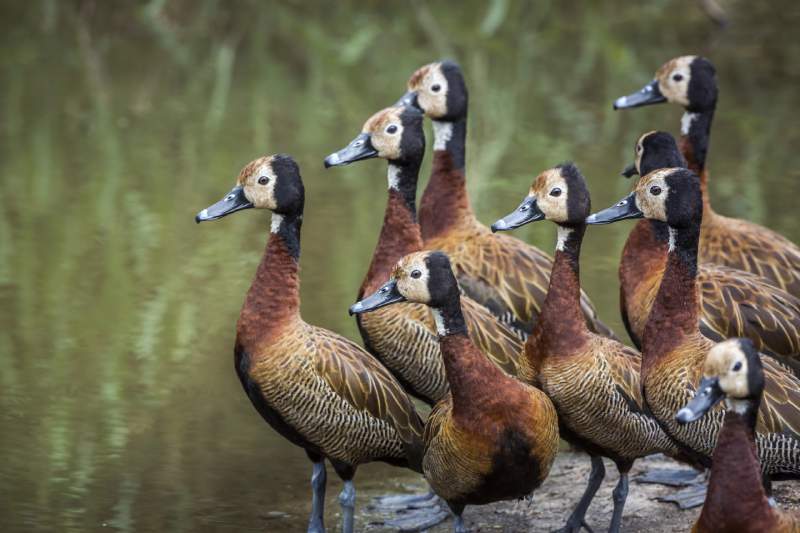
The white-faced whistling duck is a highly social waterfowl, easily recognized by its distinctive white face and long neck. Found across sub-Saharan Africa in wetlands, lakes, and floodplains, these ducks form large, vocal flocks that are often heard before they are seen. They are primarily herbivorous but supplement their diet with small invertebrates, playing an important role in aquatic ecosystems.
Highly adaptable and resilient, white-faced whistling ducks are largely unaffected by human activity, yet the preservation of wetland habitats remains critical for their continued success. Their striking appearance and communal behavior make them a captivating subject for birdwatchers and an important symbol of healthy wetland ecosystems.
Scientific Name: Dendrocygna viduata
- Habitat: White-faced whistling ducks are found across sub-Saharan Africa in wetlands, lakes, ponds, rivers, and seasonal floodplains. They are highly social and often form large flocks in shallow water bodies with abundant vegetation.
- Diet: These ducks are primarily herbivorous, feeding on seeds, grasses, and aquatic plants. They also consume small invertebrates, insects, and crustaceans, particularly when feeding chicks. They forage by dabbling in shallow water or grazing along the water’s edge.
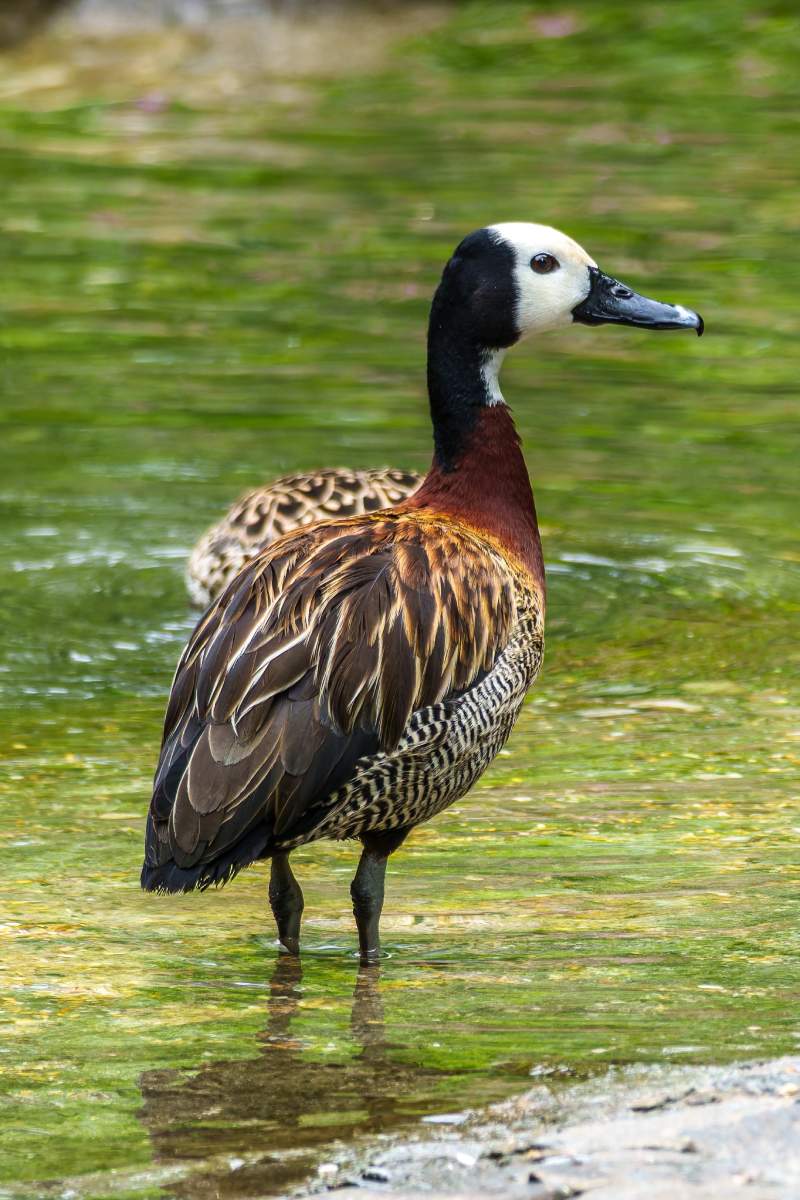
- Physical Characteristics: White-faced whistling ducks are medium-sized waterfowl, measuring 46–56 cm (18–22 inches) in length with a wingspan of 85–95 cm (33–37 inches). They have a distinctive white face contrasting with dark brown and black plumage, long necks, and webbed feet. Adults weigh between 0.9–1.2 kg (2–2.6 lbs).
- Lifespan: In the wild, they typically live 8–12 years, while in captivity they can live up to 20 years.
- Reproduction: These ducks reach sexual maturity at 1–2 years of age. They are monogamous and build nests close to water in vegetation. Females lay 8–12 eggs, which hatch after 26–28 days. Both parents protect and guide the ducklings, which are precocial and feed themselves shortly after hatching.
- Conservation Status: The white-faced whistling duck is classified as Least Concern by the IUCN Red List. Populations are stable due to their wide distribution and adaptability, though habitat loss and wetland degradation remain ongoing threats. Conservation focuses on wetland protection and sustainable land-use practices.
White-Faced Whistling Ducks at Chipangali

White-Faced Whistling Duck
Species: White-Faced Whistling Duck
Age on Arrival: Chick / Various
Arrival Date: Various
Sex: Both
The Story of the White-Faced Whistling Ducks: These ducks often arrive as chicks thought to be abandoned. Chipangali hand-rears them and releases them into protected aquatic habitats, teaching visitors about waterfowl behavior, wetland conservation, and responsible human intervention.
Get Involved!

Schools, contact us to participate in our EPIC KIDS program or to arrange a group visit to Chipangali
Important
Admission Hours & Fees
Open Tuesday to Sunday.
Closed on Mondays.
Open every Public Holiday except Christmas Day.
Hours: 8 am to 5 pm
– Adults: US$5
– Children (under 13 years of age): US$4
School Groups
– High School Students: US$4
– Primary School Students: US$3
– Teachers: US$4
Interested in Volunteering?
Volunteer Program Coordinators – GoEco:
Email: goeco@goeco.org
Schedule a phone call: click here
Website : GoEco – Volunteer in Zimbabwe
Contact Chipangali
Nicky Wilson: +263 77 235 4780
Kevin Wilson: +263 77 230 1871
General Enquiries: info@chipangali.com