 +263 772 354 780 | +263 772 301 871

Grey Crowned Crane
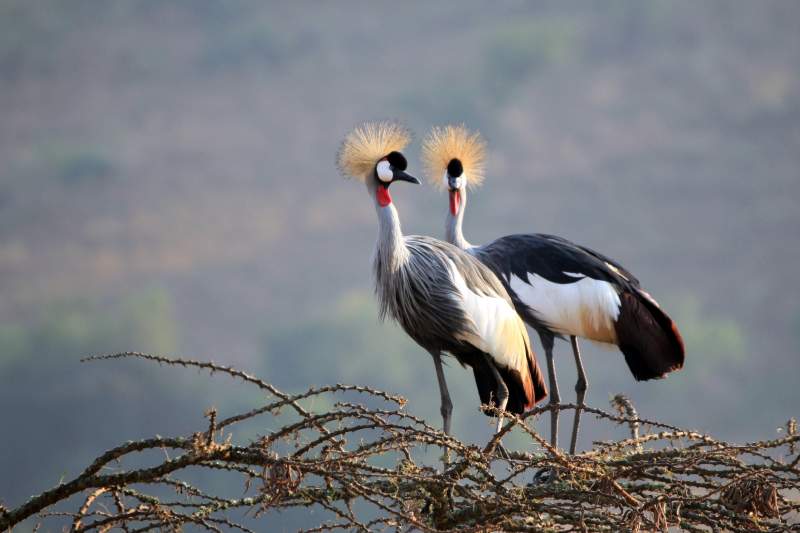
The grey crowned crane is an elegant and highly social bird, celebrated for its striking golden crest and graceful movements. Often found in wetlands, marshes, and grasslands, these cranes rely on shallow water habitats for foraging and nesting. They are omnivorous, feeding on seeds, insects, and small vertebrates, and are known for their elaborate courtship dances that involve bowing, jumping, and wing flapping. While they are capable of long-distance flight and can traverse large areas, their populations are threatened by wetland drainage, habitat loss, and illegal capture for trade. Conservation initiatives emphasize wetland preservation and public education, ensuring that these iconic birds continue to thrive in both natural and protected landscapes.
Scientific Name: Balearica regulorum
- Habitat: Grey Crowned cranes inhabit wetlands, grasslands, marshes, and cultivated areas across eastern and southern Africa, including Kenya, Uganda, Tanzania, and South Africa. They are highly dependent on wetlands for feeding and nesting but are also adaptable to adjacent agricultural landscapes.
- Diet: These cranes are omnivorous, feeding on a mix of plant material, seeds, grains, insects, small reptiles, amphibians, and invertebrates. They often forage in shallow wetlands or damp grasslands, using their long bills to probe the soil or water.
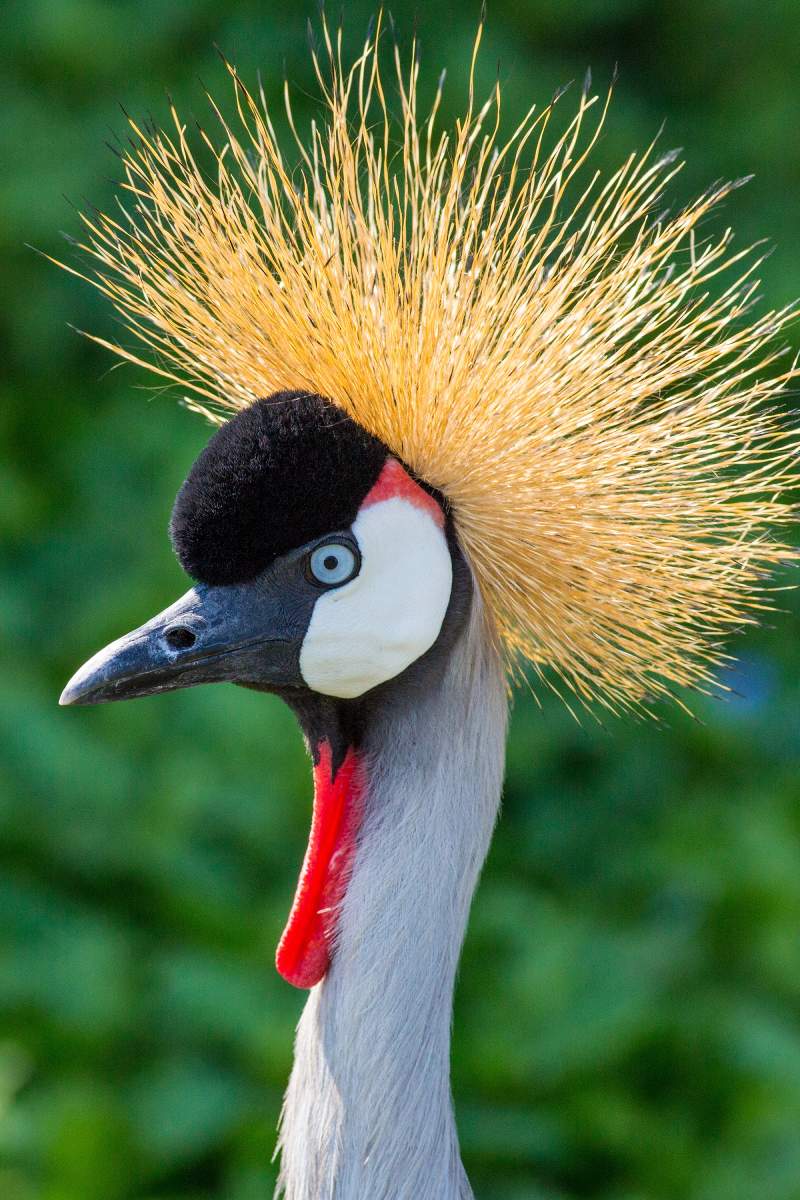
- Physical Characteristics: Grey crowned cranes are large, elegant birds standing 100 to 120 cm (39–47 inches) tall with a wingspan of up to 2 meters (6.5 feet). They have predominantly grey plumage, black wing feathers, and a striking golden crest of stiff feathers on their head. Their faces are mostly white with a red throat patch. Adults weigh between 3 to 5 kg (6.6–11 lbs).
- Lifespan: In the wild, grey crowned cranes live around 20–25 years, while in captivity, they can live up to 30 years.
- Reproduction: Grey crowned cranes reach sexual maturity at around 3–5 years of age. They typically form monogamous pairs and build nests in shallow wetlands. After an incubation period of 27–31 days, females lay 2 eggs per clutch. Both parents share incubation duties and care for the chicks, which are able to walk and feed shortly after hatching but remain dependent on their parents for several months.
- Conservation Status: The grey crowned crane is classified as Endangered by the IUCN Red List. Their populations are declining due to wetland drainage, habitat loss, and illegal capture for trade. Conservation initiatives focus on wetland protection and awareness programs to prevent persecution and habitat destruction.
Grey Crowned Cranes at Chipangali

Frazier
Species: Crowned Crane
Age on Arrival: Unknown
Arrival Date: Unknown
Sex: Male
Frazier’s Story: Frazier arrived with a partially damaged wing, preventing him from flying. Now a permanent resident, he educates visitors about the fragility of wildlife, the impact of injuries, and the sanctuary’s role in offering care and protection. His presence demonstrates the balance between safety in captivity and the wild freedom his species normally enjoys.
Get Involved!

Schools, contact us to participate in our EPIC KIDS program or to arrange a group visit to Chipangali
Important
Admission Hours & Fees
Open Tuesday to Sunday.
Closed on Mondays.
Open every Public Holiday except Christmas Day.
Hours: 8 am to 5 pm
– Adults: US$5
– Children (under 13 years of age): US$4
School Groups
– High School Students: US$4
– Primary School Students: US$3
– Teachers: US$4
Interested in Volunteering?
Volunteer Program Coordinators – GoEco:
Email: goeco@goeco.org
Schedule a phone call: click here
Website : GoEco – Volunteer in Zimbabwe
Contact Chipangali
Nicky Wilson: +263 77 235 4780
Kevin Wilson: +263 77 230 1871
General Enquiries: info@chipangali.com