 +263 772 354 780 | +263 772 301 871
  info@chipangali.com
Black Mambas

Black mambas are legendary and feared serpents, known for their incredible speed and potent venom. Found in sub-Saharan Africa, they inhabit savannas, woodlands, and rocky outcrops. They are often found near human habitations where their prey is abundant. Despite their fearsome reputation, black mambas are shy and will avoid confrontation if possible. Their olive to grey coloration and black mouth interior make them distinctive. These snakes are agile climbers and fast movers on the ground, capable of reaching speeds up to 20 km/h. Conservation efforts are vital to protect black mambas from habitat destruction and persecution due to human fear of their highly venomous nature.
Scientific Name: Dendroaspis polylepis
- Habitat: Black mambas are found in sub-Saharan Africa, preferring savannas, rocky hills, and open woodlands. They are highly adaptable and can live in a variety of environments, including moist and dry forests.
- Diet: Black mambas primarily feed on small mammals, birds, and sometimes other reptiles. They are ambush predators and use their speed and potent venom to quickly subdue their prey.
- Physical Characteristics: Black mambas are slender, agile snakes with a coffin-shaped head and smooth scales. Despite their name, their skin is usually olive to grey, and the inside of their mouth is black, which they display when threatened. They are one of the longest venomous snakes in the world, typically measuring 2.5 to 3.2 meters (8.2 to 10.5 feet), but they can grow up to 4.3 meters (14 feet).
- Lifespan: In the wild, black mambas can live up to 11 years, while in captivity, with proper care, up to 20 years.
- Reproduction: Black mambas reach sexual maturity at about 2-3 years of age. They breed during the spring and early summer. After mating, females lay clutches of 6 to 17 eggs in warm, damp locations. The eggs hatch after about 2 to 3 months, and the young are fully independent and venomous from birth.
- Conservation Status: The black mamba is not currently listed on the IUCN Red List, as their populations are generally stable.
Black Mambas at Chipangali
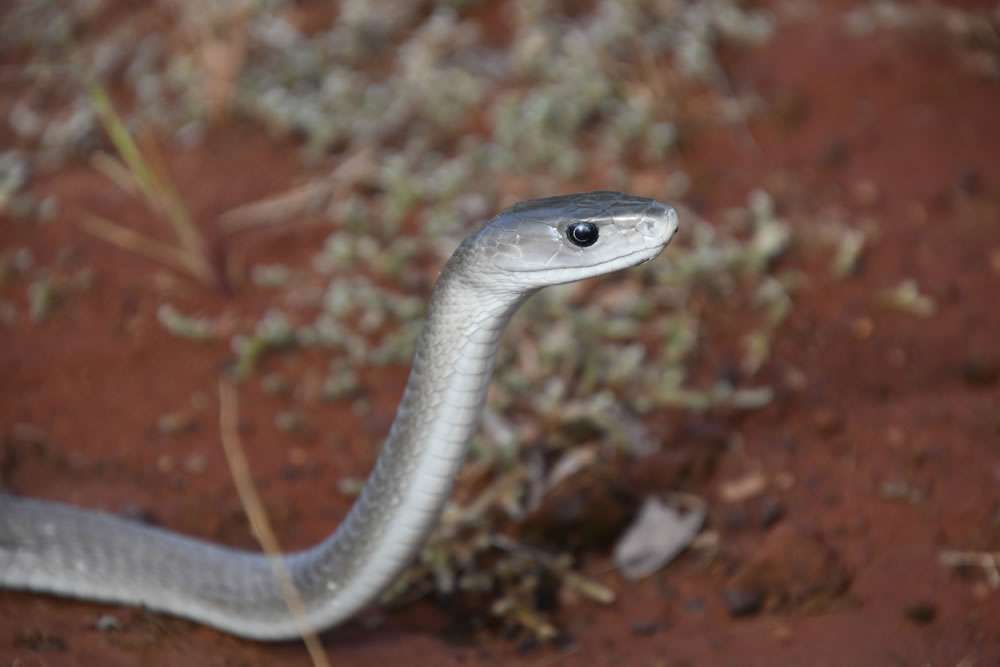
Black Mamba
Species: Black Mamba
Age on Arrival: Various
Arrival Date: Various
Sex: Both
The Story of the Black Mambas: Black Mambas at Chipangali serve as important educational ambassadors. Many arrive after being reported near homes or villages, where fear and superstition often put them at risk. At the sanctuary, they are safely housed and studied, teaching visitors about their behavior, ecological role, and safe coexistence. Black mambas demonstrate that even feared species are essential to healthy ecosystems and deserve respect.
Get Involved!
