 +263 772 354 780 | +263 772 301 871

Gaboon Vipers
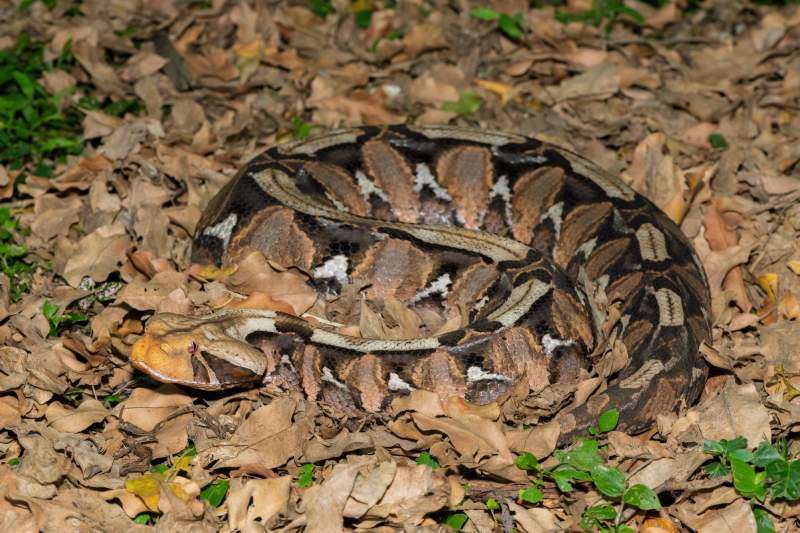
Gaboon vipers are remarkable and visually stunning snakes, famous for their impressive size and unique coloration. Native to the rainforests and savannas of West and Central Africa, they are masters of camouflage, blending seamlessly into leaf litter and forest floors. Their robust bodies and distinctive triangular heads, adorned with horn-like structures, make them easily recognizable. Gaboon vipers are ambush predators, relying on their long fangs and potent venom to subdue prey. Despite their generally docile nature, habitat preservation is essential to protect these extraordinary reptiles from threats such as deforestation and illegal collection. Reducing human-wildlife conflict through education and awareness programs is another important strategy to support populations in the wild.
Scientific Name: Bitis gabonica
- Habitat: Gaboon vipers are found in the rainforests and savannas of sub-Saharan Africa, primarily in West and Central Africa. They prefer dense, humid forests with abundant leaf litter and underbrush, where they can camouflage effectively.
- Diet: Gaboon vipers primarily feed on small to medium-sized mammals, birds, and occasionally amphibians. They are ambush predators, relying on their excellent camouflage to remain hidden while they wait for prey to come within striking distance.
- Physical Characteristics: They are known for their striking appearance, with a pattern of brown, yellow, and purple hues that provides excellent camouflage in leaf litter. They have the longest fangs of any venomous snake, measuring up to 5 cm (2 inches). They are heavy-bodied snakes, typically growing to 1.2 to 1.8 meters (4 to 6 feet) in length, with some individuals reaching up to 2.2 meters (7.2 feet). They have a distinctive triangular head with two horn-like structures on their snout.
- Lifespan: In the wild, Gaboon vipers can live up to 10-15 years, while in captivity, they can live up to 20 years with proper care.
- Reproduction: Gaboon vipers are ovoviviparous, meaning females give birth to live young. They reach sexual maturity at about 2 to 3 years of age. After a gestation period of about 7 months, females give birth to litters ranging from 20 to 60 young.
- Conservation Status: The Gaboon viper is not currently listed on the IUCN Red List, as their populations are generally stable. However, they face threats from habitat destruction due to deforestation and human encroachment.
Gaboon Vipers at Chipangali

Gaboon Viper
Species: Gaboon Viper
Age on Arrival: Various
Arrival Date: Various
Sex: Both
The Story of the Gaboon Vipers: Gaboon vipers at Chipangali are part of a conservation breeding program, helping to maintain populations in Zimbabwe’s limited range while combating illegal wildlife trade. Visitors learn about their ecological role, the threats they face, and the importance of protecting rare and misunderstood reptiles. These vipers are living ambassadors for species conservation, demonstrating how education and breeding initiatives can safeguard vulnerable wildlife.
Get Involved!
