 +263 772 354 780 | +263 772 301 871

Helmeted Guinea Fowls
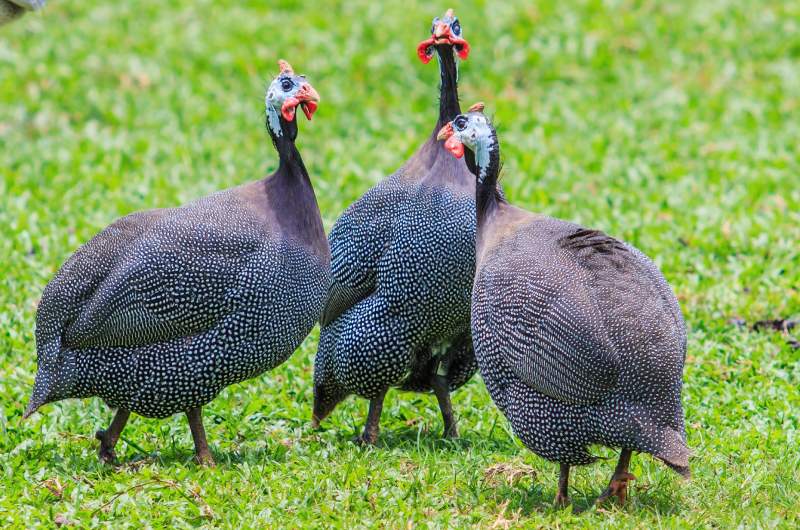
Guinea fowls are captivating ground-dwelling birds, recognized for their striking spotted plumage and loud, distinctive calls. Native to Africa, they inhabit a variety of environments from savannas and forests to agricultural areas. These social birds often form large flocks, foraging for seeds, insects, and small invertebrates on the ground. Their strong legs and short wings enable them to run swiftly and fly short distances to escape predators. Despite their adaptability, guinea fowls are essential for ecosystem balance, controlling insect populations and dispersing seeds, underscoring the importance of their conservation. Local populations can be affected by habitat loss, hunting, and predation thus conservation is mainly focused on mitigating this impact on populations.
Scientific Name: Numida meleagris
- Habitat: Helmeted guinea fowls are native to Africa and are found in a variety of habitats, including savannas, grasslands, open woodlands, scrublands, and farmlands. They prefer areas with dense undergrowth where they can forage and take cover from predators.
- Diet: They are omnivores with a diet that includes seeds, insects, small mammals, fruits, and greens. They are ground foragers and play an essential role in controlling insect populations.
- Physical Characteristics: They are easily recognizable by their distinctive helmet-like casque on the top of their heads, bare blue and red skin on their faces, and a body covered with dark feathers speckled with white spots. Adult guinea fowls typically weigh between 1.3 to 1.8 kg (2.9 to 4 lbs) and measure about 53 to 58 cm (21 to 23 inches) in length.
- Lifespan: In the wild, helmeted guinea fowls can live up to 10-15 years, though in captivity, their lifespan can extend to 15-20 years with proper care.
- Reproduction: Helmeted guinea fowls reach sexual maturity at about one year of age. During the breeding season, which typically coincides with the rainy season, females lay clutches of 6 to 12 eggs in well-hidden nests on the ground. The incubation period lasts about 26 to 28 days.
- Conservation Status: They are classified as Least Concern by the IUCN Red List due to its wide range and large population.
Helmeted Guinea Fowls at Chipangali

Guinea Fowl
Species: Guinea Fowl
Age on Arrival: Hatchlings / Various
Arrival Date: Various
Sex: Both
The Story of the Guinea Fowls:
Guinea fowls at Chipangali are carefully bred and incubated to bolster the natural population within the sanctuary’s game park. By raising chicks in a safe environment and releasing them into protected areas, the sanctuary ensures their survival and genetic diversity. These birds also teach visitors about breeding behaviors, ecosystem benefits such as insect control, and the importance of proactive conservation.
Get Involved!
